Patient reviews have become one of the most influential factors shaping a clinic's online identity. Before visiting a doctor or choosing a hospital, patients almost always check Google, Healthgrades, Yelp, or social media to see what others are saying. A single negative review can send potential patients to a competitor, while a strong, positive digital presence can double or even triple appointment bookings.
This is what the reputation management departments are in hospitals. They are essential pillars of growth in the digital era. As healthcare consumer behavior evolves, clinics, physicians, and hospitals must acknowledge digital trust and take deliberate steps toward managing their online presence.
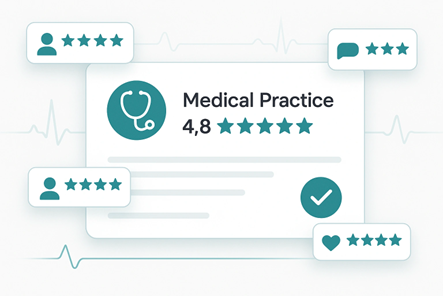
Patients today behave much like consumers. They research doctors the same way they research hotels, restaurants, and even products on Amazon. It’s estimated that over 80% of patients read online reviews before scheduling an appointment, making your digital reputation a deciding factor in whether they choose you or not.
This new generation of digital patients has reshaped how practices must approach digital healthcare marketing.
Search engines and healthcare directories have made it incredibly easy for patients to look up credibility and compare providers.
Patients trust other patients more than ads, websites, or even medical credentials.
Modern patients expect honest, real feedback from individuals who have faced similar medical concerns.
Most patients will not book with providers who have fewer than 4 stars online.
Before a patient even steps into your clinic, reviews have already formed their first impression. It’s not like traditional advertising; reviews are:
Positive reviews act as free endorsements, driving more appointments and boosting patient trust. On the other hand, negative reviews can raise doubts and push patients to find another provider.
Physician offices, clinics, hospitals, and specialists invest in professional physician marketing services to nurture positive reviews and respond effectively to negative ones.
Search engines reward practices with strong engagement, consistent reviews, and high star ratings. Google’s algorithm prioritizes businesses that appear reputable, relevant, and reliable.
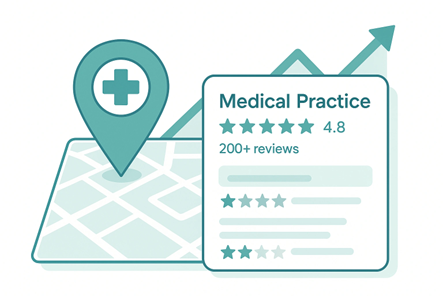
This directly impacts your website and listing traffic, making reviews a core element of medical practice digital marketing strategies.
If your practice has more reviews and stronger ratings than your competitors, Google is more likely to show your listing first, giving you an immediate competitive advantage.
Healthcare is an industry built on trust. When someone leaves a negative review accusing a clinic of long waiting times, poor staff behavior, incorrect diagnosis, or unprofessional communication, potential patients immediately question the practice’s reliability.
Patients assume negative experiences reflect your overall standard of care.
Patients choose competitors with better feedback.
Google penalizes poorly rated providers.
Negative feedback affects team performance and culture.
Unsatisfied patients may exaggerate or misinterpret experiences.
Understanding why patients leave reviews helps you manage them better. Patients review healthcare providers because:

Patients leave reviews because they want healthcare providers to acknowledge their experiences. Writing a review gives them a voice, especially when they feel their concerns were overlooked during the visit. Being heard provides emotional relief and creates a sense of participation in improving the clinic’s quality of care.
When patients face confusion, anxiety, or dissatisfaction, they seek validation through reviews. Sharing their experience publicly reassures them that their feelings are justified. They hope others understand their situation and that the provider recognizes any mistakes. Validation helps patients process their emotions and feel more confident about their healthcare decisions.
Many patients leave reviews to guide future patients. They believe their insight, positive or negative, can help someone choose the right doctor. This sense of responsibility motivates them to share honest, detailed feedback, ensuring others avoid poor experiences and benefit from excellent providers, ultimately strengthening community trust in healthcare choices.
Patients appreciate compassionate care and exceptional service. When staff go beyond expectations, patients feel compelled to acknowledge those efforts publicly. Positive reviews serve as a way to express gratitude and reward providers for professionalism, kindness, and expertise. These reviews reinforce strong relationships and highlight what your practice is doing right.
Healthcare experiences can be emotional, whether due to pain, stress, or frustration. Leaving a review provides an outlet for these feelings. Patients use reviews to release negative emotions, regain a sense of control, and share their story. This emotional release often explains why negative reviews are longer and more intense.
Reviews are not just comments. They are data, insights, and opportunities to improve your healthcare business. Try these things:
Patients are more likely to leave reviews when asked politely.
A simple acknowledgment builds trust and shows accountability.
Never argue online; use professionalism to demonstrate your integrity.
This helps you improve the patient experience. These techniques are frequently implemented by agencies specializing in medical practice advertising.
Patients no longer rely on conversations with friends only; social media has become the digital equivalent of word-of-mouth referrals.
Platforms like Facebook, Instagram, and TikTok allow patients to:
This makes social media an essential part of medical practice and digital marketing.
Key Benefits of Social-Media-Driven Patient Reviews
Practices not active on social platforms miss out on powerful patient engagement and retention tools.
Building a strong online presence requires consistency, patience, and professional strategy. Healthcare providers often hire experts for medical practice reputation management to monitor their digital image around the clock.
A strong website is the foundation of healthcare digital marketing.
Such as:
Use platforms like Facebook, Instagram, and LinkedIn to share updates, patient success stories, clinic news, and health tips. Consistent posting humanizes your practice, builds community engagement, and strengthens your online presence. This makes you more relatable and trustworthy to potential patients.
Share blogs, FAQs, videos, infographics, and treatment explanations. This builds authority and trust. Patients appreciate accessible information that helps them understand conditions, procedures, and treatment options. Educational content also boosts SEO and positions your practice as a reliable expert.
Delayed responses can multiply negative perceptions. Responding quickly shows accountability and care. Address concerns professionally, thank patients for positive feedback, and ensure every response reflects a commitment to patient satisfaction. Consistent engagement prevents misunderstandings and protects your online reputation.
A strong online reputation separates thriving practices from struggling ones. Here’s how patient reviews give you an edge:
Positive reviews don’t just describe your service, they shape your clinic’s identity.
Negative reviews often reflect preventable issues within the practice. Implementing the following strategies can significantly reduce them:
Most complaints are about staff interactions, not the physician.
Patients appreciate clear explanations and follow-ups.
Offer digital check-in and appointment reminders.
Ask for private feedback before they post publicly.
Small improvements in the environment and hospitality go a long way.
Modern reputation management is powered by automation, analytics, and digital tools.

Practices use these tools to make their reputation stronger and improve patient acquisition by ensuring every patient interaction is monitored, optimized, and aligned with trust-building digital strategies that keep their practice visible, credible, and competitive in the online healthcare.
The future of reputation management for medical practices will be:
Healthcare providers who adopt digital-first strategies will thrive.
Reviews do far more than reflect your services. They shape your future. They influence trust, drive bookings, and determine whether your practice becomes better or struggles. Through consistent review generation, professional response strategies, high-quality patient care, and structured healthcare marketing on digital platforms, practices can change even their bad reputation to good.
The practices that listen, evolve, and engage with their patients online will lead the healthcare industry in 2026 and beyond.
Medical practices should request reviews consistently after every appointment, follow-up, or virtual consultation. Asking immediately, while the experience is fresh, results in higher response rates. A structured and automated review request system ensures regular feedback, builds credibility, and prevents long gaps in online activity.
The best approach is to make review requests part of the natural patient journey. After a successful appointment, send a friendly follow-up message with a simple review link. Train staff to ask politely during checkout. Provide QR codes at the front desk. When patients feel genuinely cared for, they willingly share positive feedback without feeling pressured.
Google is the most important platform. However, healthcare-specific sites like Healthgrades, Zocdoc, Vitals, RateMDs, and WebMD also play a role. Social media reviews on Facebook and Instagram help build a broader digital presence. A multi-platform strategy ensures consistent credibility across every place patients look for medical providers.
Telemedicine patients rely heavily on reviews since they cannot judge a clinic’s environment or staff in person. Reviews help them evaluate professionalism, communication quality, availability, and effectiveness of virtual care. Positive telehealth reviews attract patients who prefer remote consultations, while negative ones can deter them instantly.
If a review is fake, inaccurate, or malicious, document it and report it to the platform for investigation. Provide clear reasoning, such as no record of the reviewer being a patient. Avoid arguing publicly. While waiting for removal, post a professional response that clarifies the situation without revealing private medical information, protecting your reputation ethically.
New practices can compete by building a consistent flow of genuine patient reviews, maintaining an optimized Google Business Profile, and using strong digital healthcare marketing. Early reputation-building, through excellent service, fast responses, and modern communication, helps establish trust quickly.

