Today’s patients don’t just see a signboard and walk in. They search, tap, scroll, and judge us long before they ever call the front desk. A mother might check your Instagram to see if our pediatric clinic feels friendly. A busy professional might scan your Facebook page during a lunch break to see if you explain things in plain language.
As a healthcare-focused digital team at Healthcare Web Profs, we see this every day. Social media in healthcare is no longer a “nice to have.” It is an integral part of the real patient journey. In this guide, we’re sharing how we use social media marketing as a practical tool to help clinics, hospitals, and private practices connect with people in an honest and patient-first way.
When patients feel familiar with a clinic before they ever make contact, their hesitation drops. Recognition creates comfort, and comfort strongly influences healthcare decisions. This happens because the human brain is wired to trust what it has seen before. In psychology, this is known as the familiarity effect. In healthcare, it plays out very clearly through online exposure.

When a patient repeatedly sees a clinic’s name, staff faces, tone of voice, and environment across social platforms, the clinic stops feeling unknown. Even without direct interaction, the brain starts labeling it as safer and more predictable. This matters because healthcare decisions often happen under stress, pain, or worry. In those moments, people naturally lean toward options that feel less uncertain.
Recognition also reduces fear of the visit itself. Seeing real exam rooms, front desk staff, or short explanations from providers helps patients mentally rehearse what will happen. That mental preview lowers anxiety. It answers unspoken questions like “Will they explain things clearly?” or “Does this place feel organized and calm?” without the patient needing to ask.
There is also a credibility factor. A clinic that appears consistently online signals stability. Patients often associate regular, clear activity with professionalism and operational reliability. When profiles look active, updated, and aligned with the clinic’s real services, patients are less likely to worry about outdated information or poor communication.
We don’t see social media as a place just to promote the services. Using these 5 tips, we help patients know a clinic, understand what it offers, and feel confident enough to book an appointment.
A patient’s first stop is almost always your profile. Before they watch a reel or read a caption, they skim the top section to understand who you are. We design profile pages as quick information hubs, ensuring patients get the basics without having to hunt for details. This is one of the first steps in effective social media healthcare marketing.
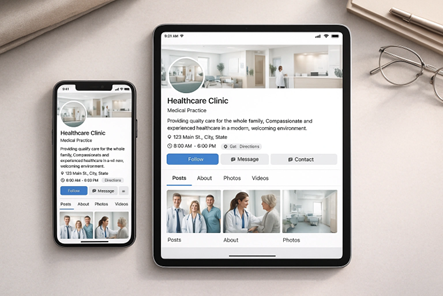
Before we plan ongoing content, we set up profiles clearly:
Anything becomes meaningful when patients see themselves in it. Instead of relying only on educational graphics, we build narratives around small but real clinic moments.
Here’s how we use relatable stories for social media marketing:
Instead of guessing what patients want, we study real behavior. Social media marketing platforms provide valuable data that shows which topics matter most to patients. We use these patterns to shape future posts so that the content feels relatable and helpful.
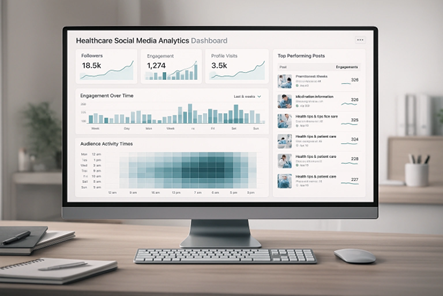
A healthcare advertising agency looks at insights in a few clear ways:
Targeted social media marketing ads help when a clinic needs to reach a specific audience quickly, such as promoting a new service, introducing a specialist, or sharing seasonal health updates. They ensure your message reaches people who are likely to benefit from it.
When we set up campaigns, we follow a simple structure:
Social media in healthcare is most effective when patients feel a sense of openness and comfort. We help clinics create pages and websites that feel welcoming, so people are comfortable asking questions or sharing basic concerns.
To help clinics build conversational habits, physician marketing services focus on:
As a physician marketing service, when we audit social accounts for new clients, we often see the same patterns that hold them back. These issues are not due to a lack of expertise, but rather because small, behind-the-scenes issues often get overlooked.
Why do some clinics create a social media page without knowing what they want it to achieve?
Many practices join social media marketing platforms simply because others do, rather than having a defined reason for being there. When the purpose is unclear, the content often feels scattered, inconsistent, or unrelated to what patients actually need.
To fix this, we help clinics choose clear directions before posting anything for medical practice advertising:
Have you ever looked at a clinic’s feed and felt like every post came from a different person with a different style? This inconsistency affects the effectiveness of healthcare social media marketing.
When multiple team members post without shared guidelines, the page gradually loses its structure. Colors shift, tone changes, and captions feel inconsistent. After a while, the feed starts to look unprofessional.
To prevent this, we set up some guidelines that every team member can use, such as:
Should a clinic’s social page reflect personal opinions? When marketing for healthcare companies, the answer is almost always “No!”
Patients visit a practice’s page expecting clear, helpful information, not personal beliefs or unrelated commentary. When the feed includes opinions that have nothing to do with care, patients may feel confused or unsure about the clinic’s professionalism.
To prevent that, we keep practice accounts centered on:
Many clinics ignore the fact that “How easily can all patients consume your content?” They don’t consider accessibility in their social media marketing content, and it affects a larger audience segment.
Posts with tiny text, missing captions, or low contrast can make information difficult for patients with visual challenges, hearing issues, or those with small screens.
We improve accessibility by focusing on simple essentials:
Do you know what the right way to respond when a patient posts a critical comment is?
Many clinics either ignore it or respond in frustration, which can make the situation worse. A calm, structured response helps protect your reputation and demonstrates to other patients that your team takes their concerns seriously.
As a professional healthcare advertising agency, we guide clinics to handle these moments by:
Have you ever seen a clinic post actively for a day or two and then disappear for weeks?
This uneven pattern makes patients unsure whether the page is maintained. A predictable social media marketing rhythm helps people trust the information they see and keeps your clinic at the forefront of their minds.
We help clinics stay consistent by:
Different platforms support different patient behaviors. We guide clinics in choosing platforms based on patient habits and content capacity, rather than trends, to enhance their healthcare online marketing results.

For many regions, Facebook still functions like a digital town square. We use it for clinics that want to share updates with families, older adults, and local groups.
Content You Can Share:
If the clinic serves a broad local audience, such as a family medicine center or multi-specialty clinic, Facebook is often a good starting point. It supports longer texts, comments, sharing, and event creation, which works well for community-centered practices.
Instagram is highly visual, making it a strong choice for clinics that want to showcase the human side of care through social media marketing.
Useful Content Formats:
When Instagram Is Useful:
If the clinic wants to appeal to younger adults or parents, Instagram can be a significant help. We make sure every post fits the brand image we build on the clinic’s website and other materials, so the overall feel stays consistent.
YouTube is ideal for detailed explanations, especially when doctors want to answer recurring patient questions via social media healthcare marketing.
Effective Video Types:
When YouTube Is a Good Fit:
If a clinic has specialists who are comfortable on camera and see patients return with the same questions, YouTube can save time for everyone. We also optimize video titles and descriptions to match the terms patients naturally search for, so videos stay discoverable.
TikTok is optional and works best for short, casual social media marketing content that stays valuable and simple for people with low attention spans.
Content Examples:
When TikTok Is Worth Considering:
For healthcare digital marketing, TikTok is optional, not mandatory. We only recommend it when a practice has the capacity to film and upload often and feels comfortable communicating in a casual, fast-paced style without losing professionalism.
LinkedIn is less about direct medical practice advertising and more about professional presence. We use it mainly for hospitals, larger clinics, and specialists who want to build credibility with peers and partners.
Types of Posts We Share:
When LinkedIn Matters Most:
If a practice works with referrals, corporate partners, or other doctors, LinkedIn provides a space to show quality and reliability. We tie this back to the main brand image we maintain across the website and other channels, so everything feels unified.
When we discuss social media marketing with healthcare providers, many tell us they feel stressed. They worry about what to say, how often to post, and whether they might make a mistake that affects their reputation. That’s why we treat social media as an extension of the patient experience. Our physician marketing services help clinics manage this space with confidence.
By setting up clear profiles, sharing human stories, learning from insights, running targeted promotions when needed, and maintaining genuine conversations, we help clinics transform their pages into places patients trust. Combined with a strong website, secure forms, and smooth booking paths, social content becomes part of a larger patient journey that feels simple and supportive.
At Healthcare Web Profs, our role is to handle the medical practice advertising so healthcare teams can focus on what they do best: caring for people. When those two areas work together, social media stops being a burden and starts becoming a quiet but powerful driver of patient engagement.
Because many patients check social media channels before deciding where to go. A helpful and active presence makes it easier for people to understand who you are, what you offer, and how to reach you. It becomes part of their decision, just like location or word of mouth.
We typically recommend a consistent schedule that the team can keep, such as posting three to five times per week. The key is not volume but consistency. A smaller, regular flow of useful healthcare digital marketing content works better than bursts of activity followed by long silence.
Patients tend to respond well to clear, simple content that answers real questions. That includes short explanations, practical tips, and respectful stories about care. When we work with clinics, we check insights to see which topics resonate most with their own audience.
Yes, as long as the medical practice advertising content stays general, accurate, and respectful. We avoid sharing individual details, stay within accepted medical guidance, and use social posts to encourage people to seek proper consultations for personal concerns rather than relying only on online advice.
We begin marketing for healthcare companies with some set ground rules. This includes obtaining consent before sharing any real patient experiences, not revealing identifiable details, and directing sensitive discussions to secure channels. Our work is designed for healthcare from the start, so privacy and ethics stay in focus
For healthcare online marketing, most small practices start well with one or two platforms that match their patients, such as Facebook and Instagram. We assess the local community, the services offered, and the team’s capacity, then suggest where to start and how to integrate social profiles with the clinic website.

